
Payroll compliance has quietly become one of the most complex governance challenges organisations face.
Large data sets, ambiguous pay rules and multiple systems make accuracy difficult to monitor through traditional controls. At the same time, artificial intelligence is beginning to change how organisations analyse payroll data and detect payment variance, but it also raises new questions for boards about oversight, accountability and risk.
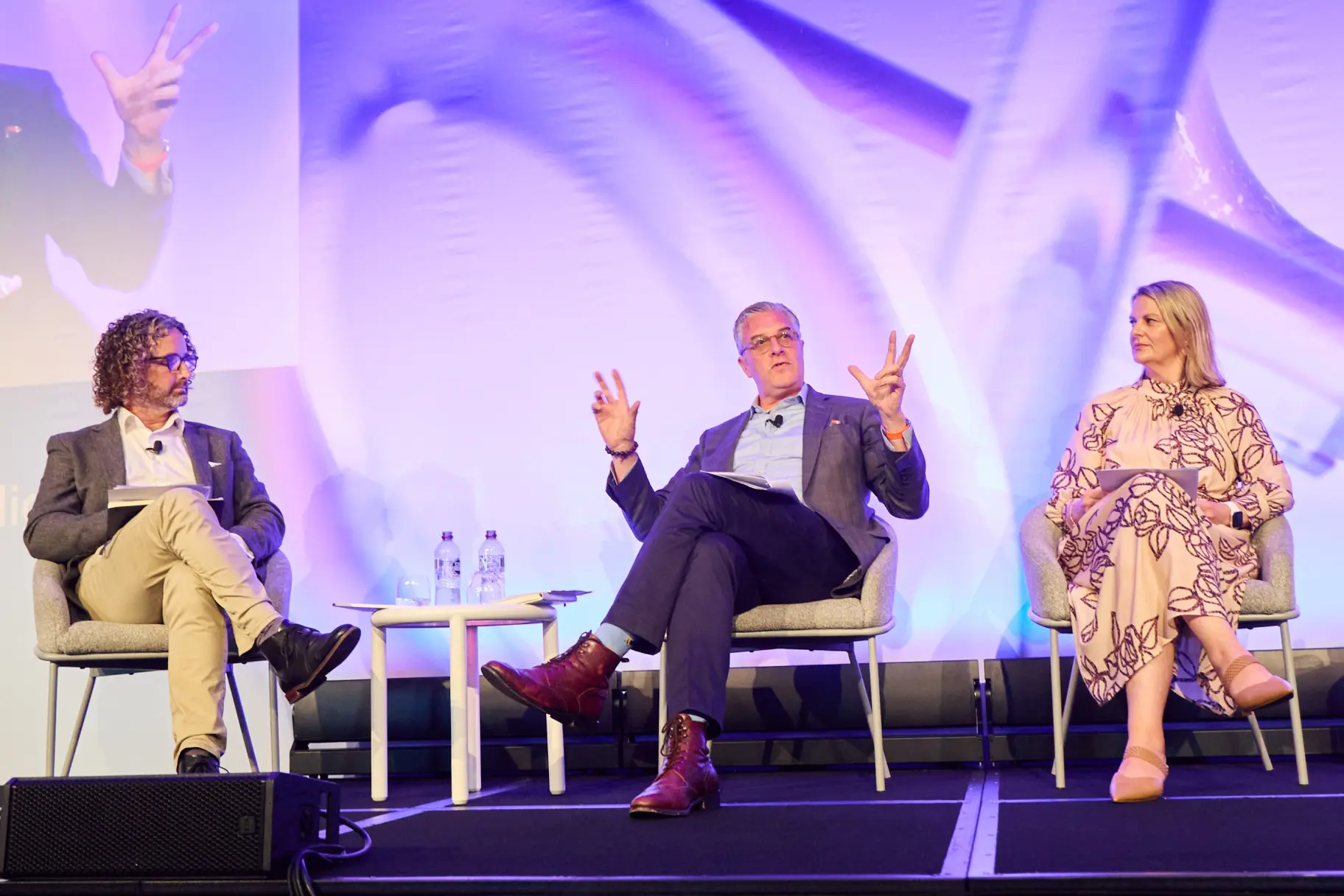
These issues were explored during a session at the AICD Australian Governance Summit 2026 hosted by the Australian Institute of Company Directors, which examined what directing in the next decade may require as artificial intelligence and a payroll compliance lens becomes embedded in organisational systems.
The discussion brought together Marcus Zeltzer, Yellow Canary’s Co-founder and Managing Director, Kate Pollard, Non-Executive Director at Stone and Chalk, and Charles Ferguson, Executive and Adviser. Drawing on experience across technology, governance and workforce management, the panel examined how artificial intelligence is reshaping payroll compliance and what that means for directors responsible for overseeing organisational risk.
Payroll compliance has moved into the boardroom
For many years payroll was treated as an operational function managed by HR, payroll and finance teams. It rarely appeared in board discussions unless a problem surfaced.
That dynamic has shifted. Over the past decade payroll compliance has become a governance issue as underpayment matters across large employers have demonstrated how quickly issues can escalate and how costly remediation can become.
During the session, one example illustrated the scale of the challenge. An organisation identified approximately $5 million in payroll variance. By the time auditors had been engaged and historical payments analysed, the cost of investigation and remediation had grown to around $20 million.
The difference between the original variance and the cost of fixing the issue highlights an important governance reality. Payroll exposure often develops gradually and the cost of remediation can far exceed the original error.
For boards, this is why payroll compliance increasingly sits on organisational risk registers and why directors are asking more detailed questions about how payroll risk is monitored.
Where artificial intelligence can help with compliance
Artificial intelligence has clear value in payroll environments because payroll data is structured, large and repetitive.
It can help organisations analyse payroll datasets at scale, identify unusual patterns and highlight areas that warrant closer investigation. Instead of relying solely on periodic checks, organisations can examine payroll outcomes across time and across workforce groups.
For example, artificial intelligence can help identify when entitlements are regularly earned in one pay period but paid in another. It can highlight recurring timing misalignments in allowances or higher duties payments and assist with root cause analysis by linking payroll outcomes to roster patterns, time records or system configurations.
These insights can help organisations prioritise payroll audits and investigations more effectively.
However, the panel emphasised an important distinction. Artificial intelligence can help analyse payroll data and surface patterns, but it does not replace interpretation or governance oversight. Human judgement remains essential.
Technology does not remove accountability
A recurring theme throughout the discussion was the misconception that automation and artificial intelligence somehow transfers responsibility away from people.
Technology can support compliance processes, but governance responsibility remains unchanged.
Boards still need to understand how systems operate, what assumptions underpin them and how errors are escalated. A dashboard may suggest everything is functioning as expected, but confidence only holds if the underlying data and logic are sound.
One question raised during the session captured this clearly.
If an organisation’s payroll system produced six months of incorrect outputs, would leadership have noticed and how?
That question goes to the heart of governance. It tests visibility, audit capability and escalation processes.
Directing in the next decade
The theme of this year’s AICD Australian Governance Summit was directing in the next decade.
Artificial intelligence will undoubtedly shape how organisations analyse data and manage operational complexity. At the same time, expectations around accountability, transparency and oversight will continue to grow.
Payroll compliance provides a practical example of this intersection. Technology can help organisations analyse payroll data and identify potential issues earlier. Effective governance determines whether those insights translate into action.
For directors, the challenge is not whether artificial intelligence will influence compliance processes. It is how boards maintain clear oversight as these technologies become embedded in organisational systems.
Strengthening payroll oversight
As payroll compliance becomes a more visible governance issue, organisations are seeking better ways to analyse payroll data and investigate payment variance.
Yellow Canary helps organisations conduct ongoing payroll audits, analyse payroll data and identify potential compliance risks across complex workforce environments.
For directors seeking stronger visibility over payroll outcomes, continuous payroll audit and analysis can provide greater insight into how payroll systems are performing.


.svg)